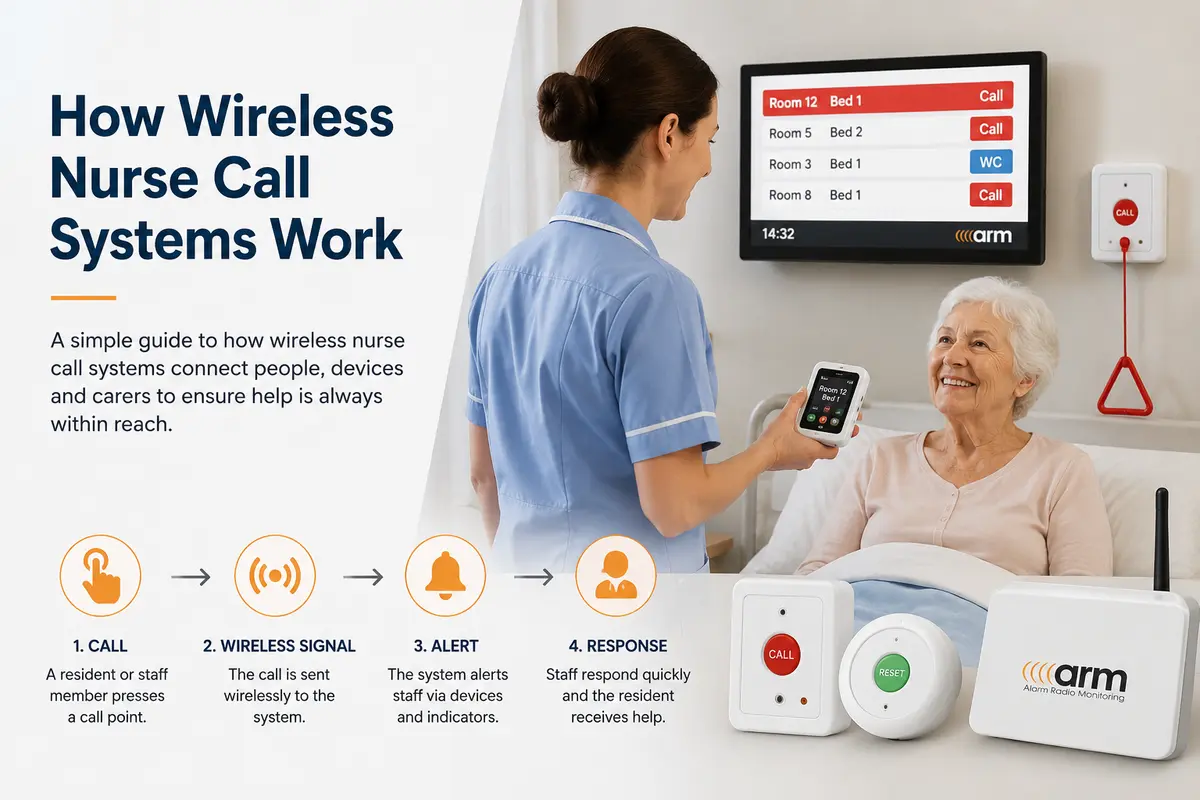
Wireless nurse call systems are used in care homes, hospitals, assisted living facilities, and specialist education settings. They allow residents, patients, or staff to request help quickly without needing fixed wired call points throughout the building.
The system works by sending a wireless signal from a call device to receiving equipment elsewhere on site. Once the alert is received, it can appear on corridor lights, display panels, pagers, handheld devices, or staff stations.
Why Wireless Systems Are Used
Wireless nurse call systems have become popular because they reduce the disruption caused by installing large wired systems. This is especially useful in occupied care homes and healthcare buildings where cabling, room access, and redecoration can be difficult.
Wireless systems are also easier to expand or adapt if rooms, layouts, workflows, or resident needs change over time.
- Care homes
- Assisted living environments
- SEN schools
- Respite facilities
- Hospitals
- Temporary healthcare environments
Many organisations also choose wireless infrastructure because of the operational flexibility explained in our guide to why wireless systems are often used in existing care buildings.
What Happens When a Call Is Activated
A call can be activated using a fixed call point, pull cord, wearable pendant, or personal alarm device. This may be located beside a bed, in a bathroom, or carried by a member of staff.
Once activated, the device sends a wireless alert through the system to receiving equipment on site.
- A corridor light may turn on
- An alert may appear on a display panel
- A pager may be triggered
- A handheld device may receive a notification
- The call may escalate if it is not answered
The Importance of Reliable Coverage
Although the system is wireless, it still needs careful planning. Receivers, transmitters, control equipment, and monitoring devices must be positioned correctly to provide reliable coverage throughout the building.
Building layout, thick walls, multiple floors, lift shafts, plant rooms, and older construction materials can all affect wireless signal performance.
This is one reason many providers carefully compare wireless vs wired nurse call systems before choosing the most suitable infrastructure for the environment.
Good System Design
A well-designed wireless nurse call system should focus on more than simply installing devices. It should be planned around the building, staff workflows, and the needs of residents or patients.
- Reliable signal coverage
- Clear alert visibility
- Effective response management
- Easy future expansion
- Simple long-term maintenance
In larger environments, system visibility and operational workflows can directly influence nurse call response times in care environments.
Modern Alert Management
Modern nurse call systems can do more than trigger an alarm. Many systems can support different alert types, priorities, and escalation procedures.
For example, a routine assistance request may be handled differently from an emergency call, staff attack alert, or movement monitoring notification.
- Response times
- Alert frequency
- Device activity
- Staff response patterns
Wireless Systems Are Not Just Temporary
Wireless nurse call systems are not only suitable for small sites or temporary installations. Many larger care and healthcare environments use wireless systems because they offer flexibility while still supporting reliable alert management.
The quality of the installation is more important than whether the system is wired or wireless. A properly planned wireless system can provide dependable performance across complex buildings.
Choosing the Right System
Different environments need different types of nurse call systems. A small care home may need a simple and easy-to-use system, while a hospital may need advanced escalation, zoning, reporting, or staff protection features.
The best system is usually designed around the environment, building layout, staff workflows, and long-term operational needs.
Care providers reviewing new infrastructure may also find it useful to understand what care homes should consider when choosing a nurse call system.
Long-Term Support
Nurse call systems need ongoing support after installation. Devices require testing, batteries need monitoring, and the system may need to be adapted as requirements change.
In care and healthcare settings, reliable communication is essential for everyday safety. Long-term maintenance, fault management, replacement parts, and technical support are therefore just as important as the initial installation.
As systems age, many organisations also begin reviewing common problems with nurse call systems and planning future upgrades accordingly.