Insights & Guidance
Practical guidance on nurse call systems, staff alarms, wireless infrastructure, and care environment communication.
-
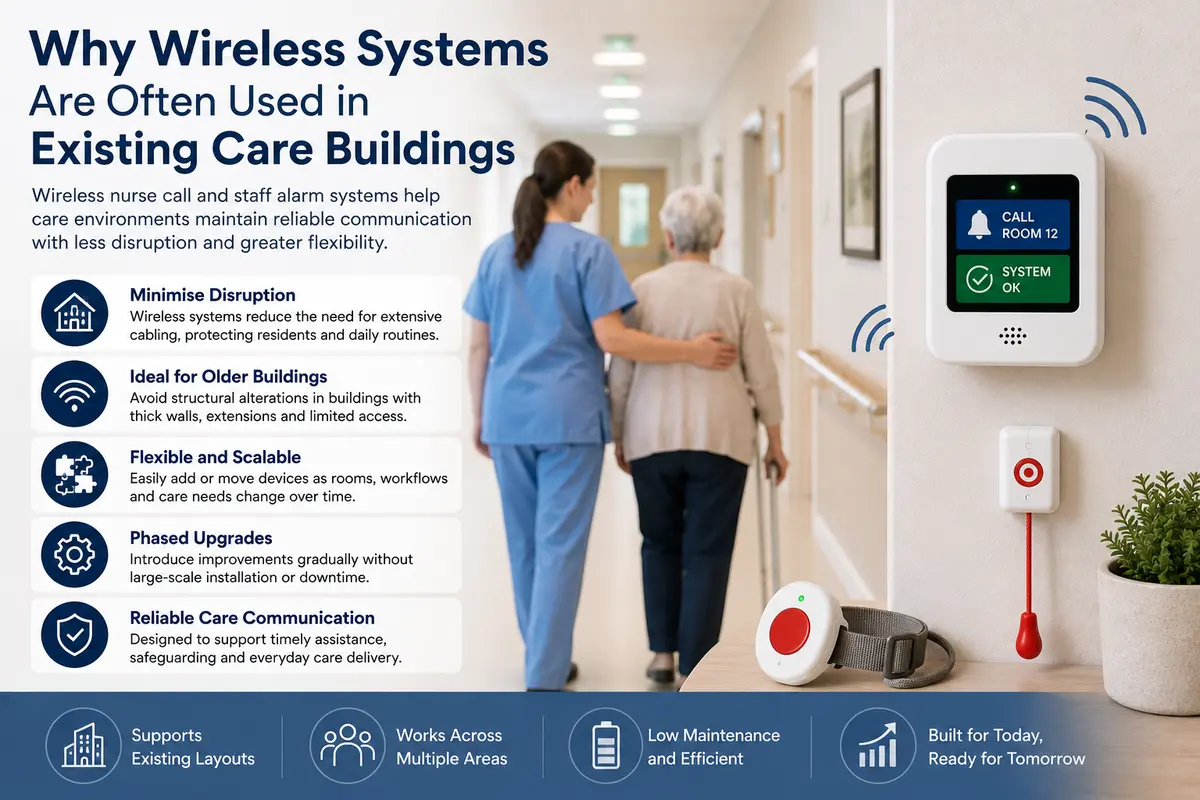
Why Wireless Systems Are Often Used in Existing Care Buildings
In many existing care homes and healthcare environments, installing new infrastructure is rarely as straightforward as it first appears. Buildings may have been gradually extended over time, converted from older properties, or repeatedly adapted as residents’ requirements and operational demands have changed. Under those conditions, introducing new cabling throughout occupied areas can create practical and […]
-
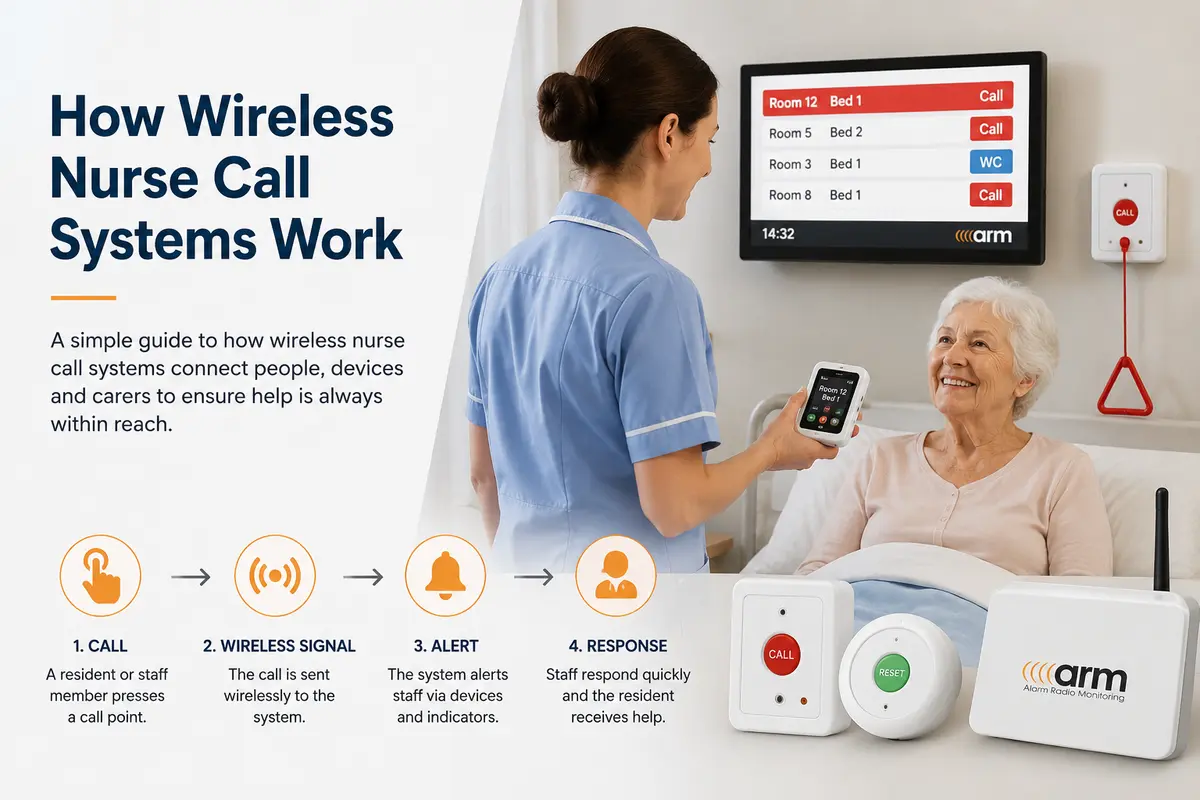
How Wireless Nurse Call Systems Work
Wireless nurse call systems are used in care homes, hospitals, assisted living facilities, and specialist education settings. They allow residents, patients, or staff to request help quickly without needing fixed wired call points throughout the building. The system works by sending a wireless signal from a call device to receiving equipment elsewhere on site. Once […]
-
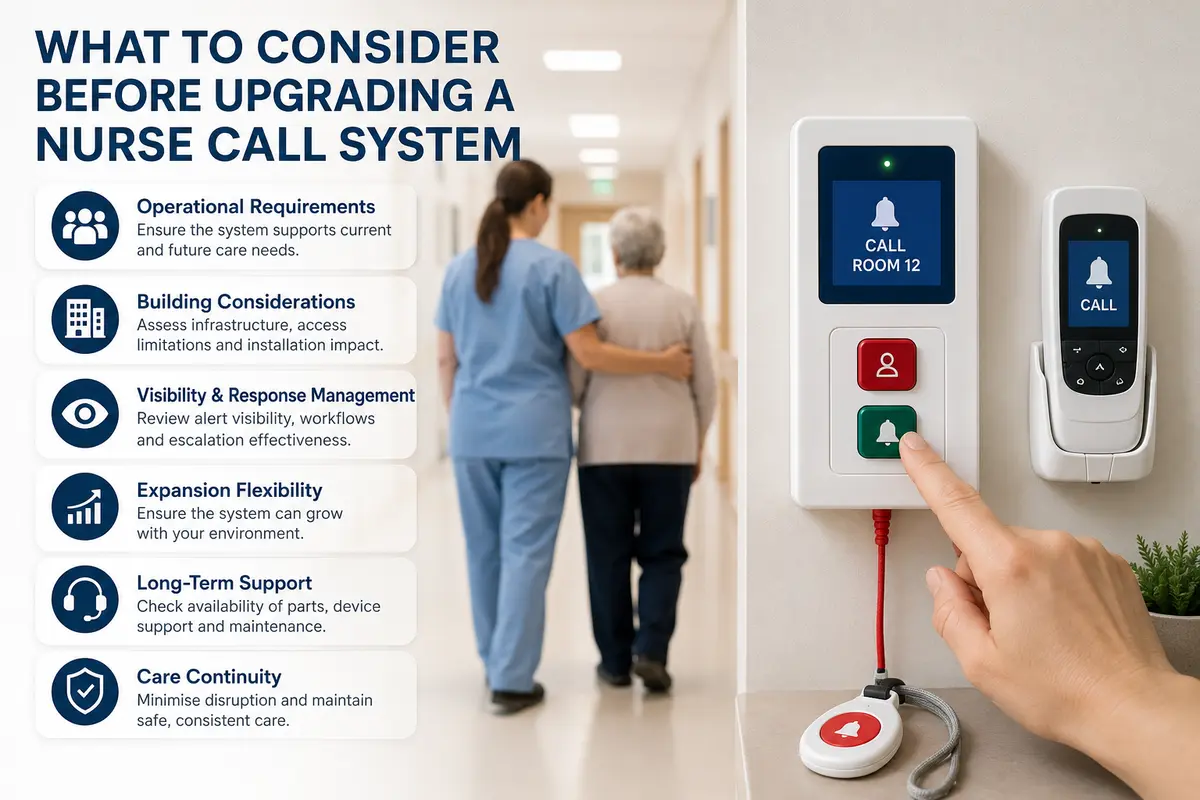
What to Consider Before Upgrading a Nurse Call System
In many care environments, nurse call upgrades are introduced gradually as operational requirements change, rather than because the existing system has stopped functioning entirely. A system may still appear operational day to day, while underlying limitations begin to affect response visibility, maintenance efficiency, expansion flexibility, or long-term reliability across the building. That is why upgrading […]
-
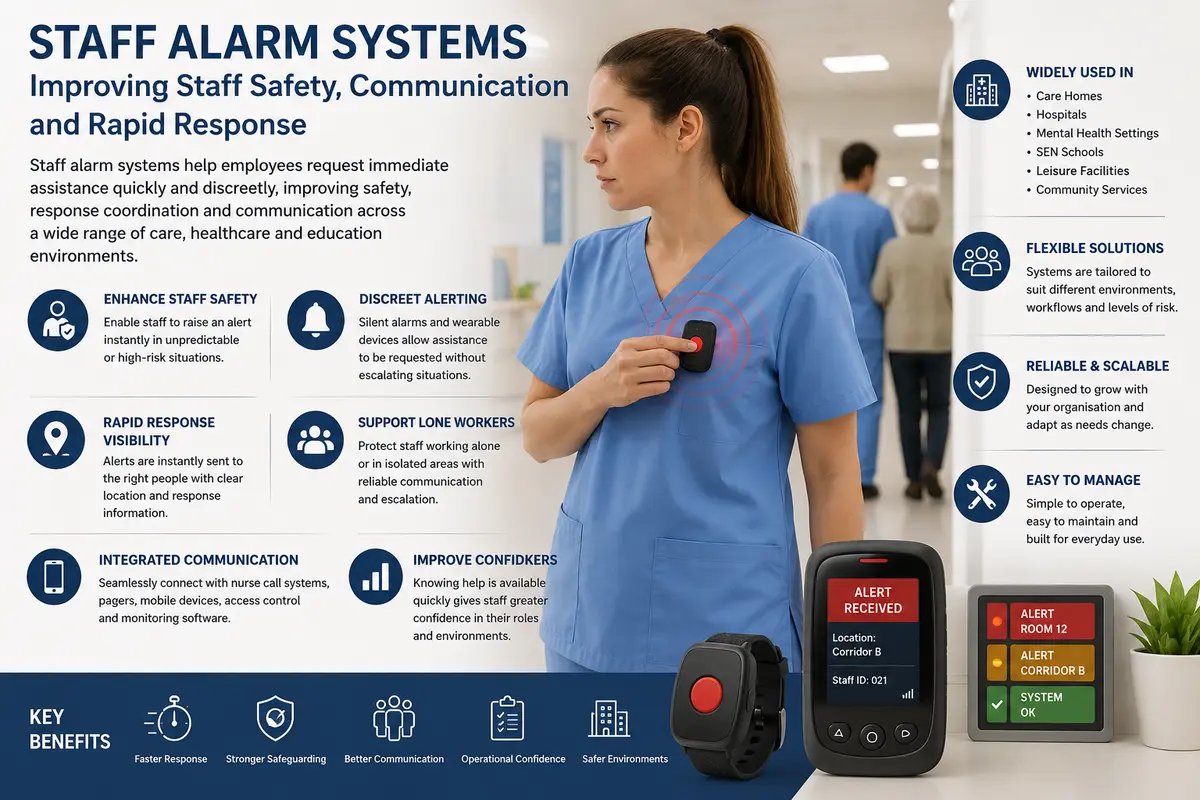
How Staff Alarm Systems Support Safer Working Environments
In many healthcare, education, and care environments, staff alarm systems are used to improve communication during situations where immediate assistance may be required, but fixed call infrastructure is not always practical. Unlike traditional nurse call systems, which are primarily designed around resident or patient assistance requests, staff alarm systems focus more directly on employee safety, […]
-
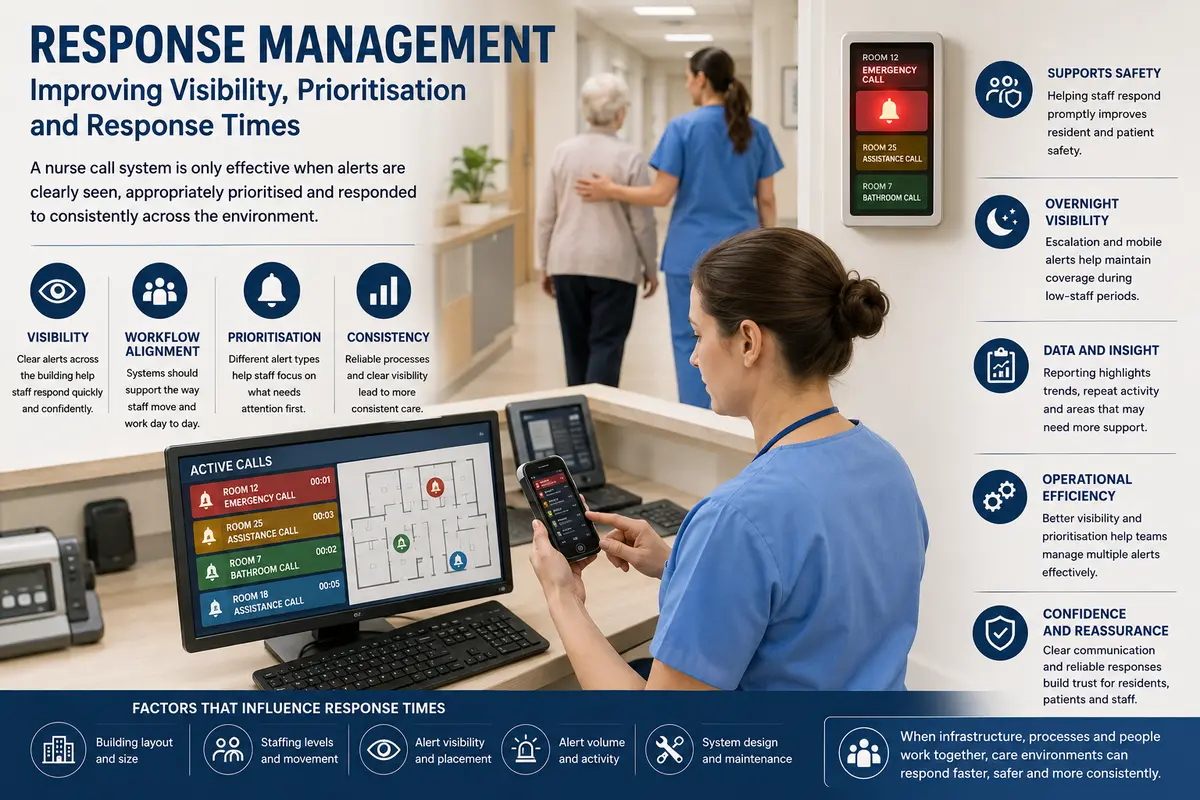
Why Nurse Call Response Times Matter in Care Environments
In most care environments, response times are influenced as much by visibility, staffing workflows, and operational organisation as they are by the nurse call infrastructure itself. A nurse call system may function perfectly technically, but if alerts are not clearly recognised or staff cannot prioritise responses effectively, delays can still occur during day-to-day operation. That […]
-
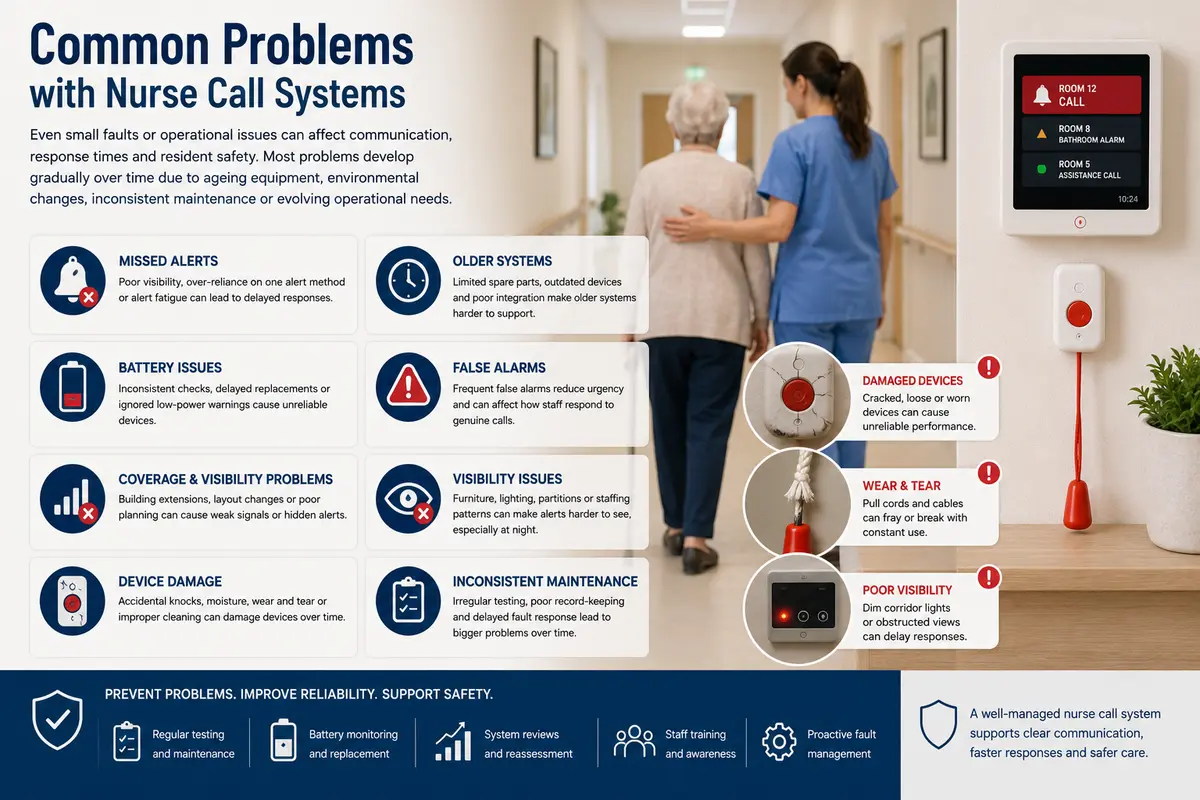
Common Problems with Nurse Call Systems
Nurse call systems are expected to operate continuously in environments where communication, response times, and resident safety are integral to everyday care delivery. Because of that, even relatively small faults or operational issues can become significant surprisingly quickly if they are left unresolved. In practice, most nurse call problems are not caused by complete system […]
-
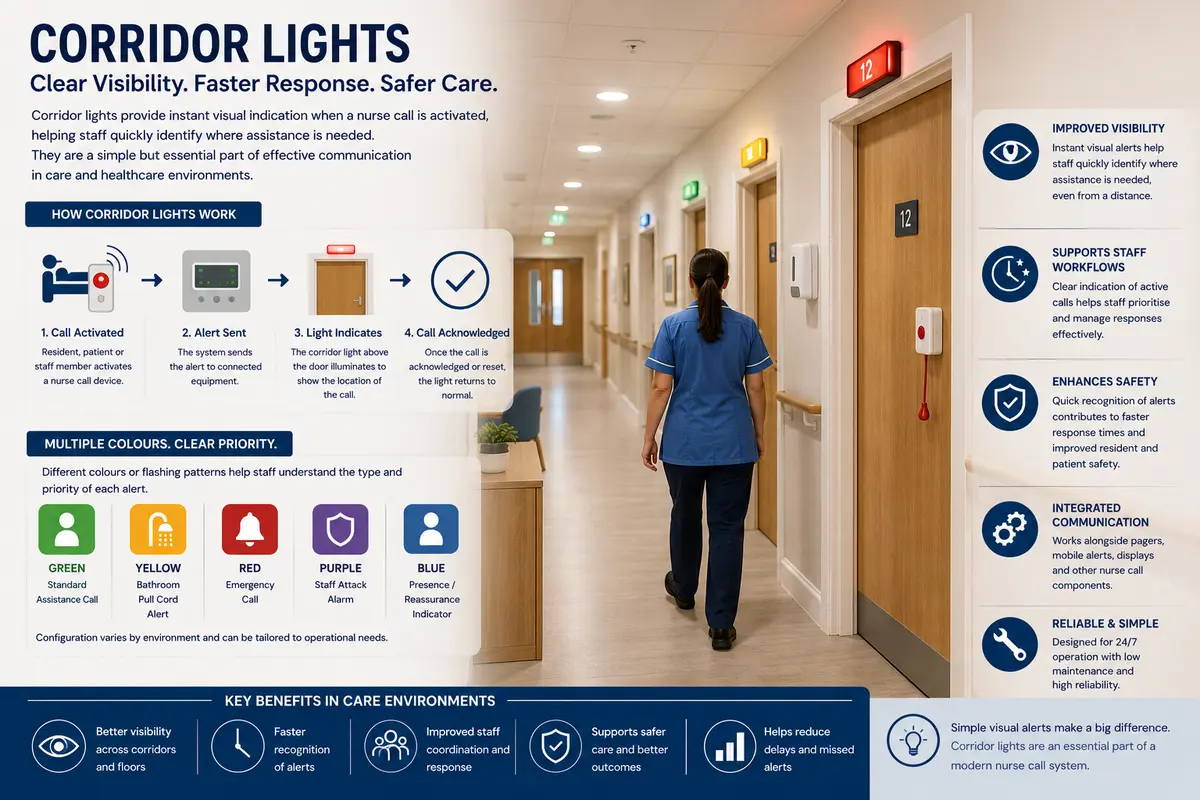
Understanding Nurse Call Corridor Lights
Corridor lights are among the simplest yet most operationally important components of a nurse call system. In busy care environments, staff often identify active alerts visually before they check a display panel, handheld device, or pager notification. For that reason, corridor lights are not simply an accessory added onto a system. In many care homes […]
-
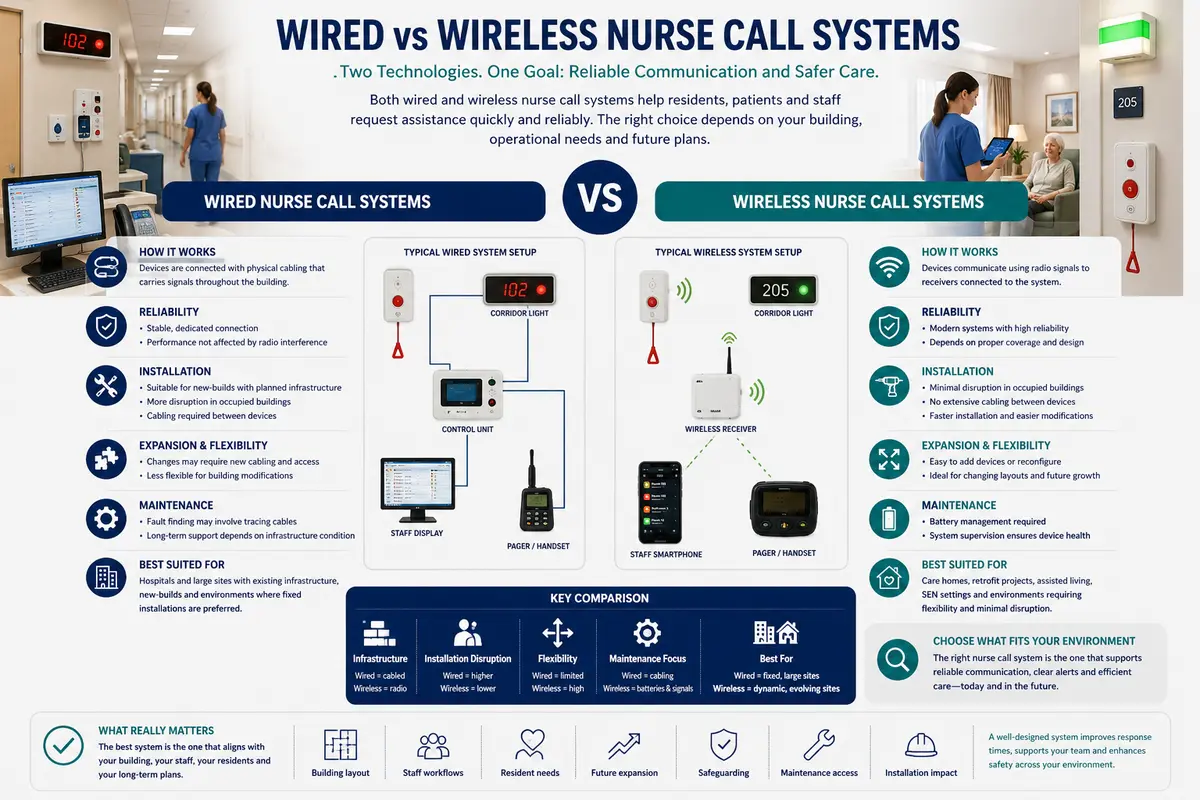
Wireless vs Wired Nurse Call Systems
Wireless and wired nurse call systems are both designed to achieve the same core objective: allowing residents, patients, or staff to request assistance quickly and reliably within healthcare and care environments. The difference lies in how those systems communicate throughout the building and how easily the infrastructure can adapt over time. In practice, the decision […]
-
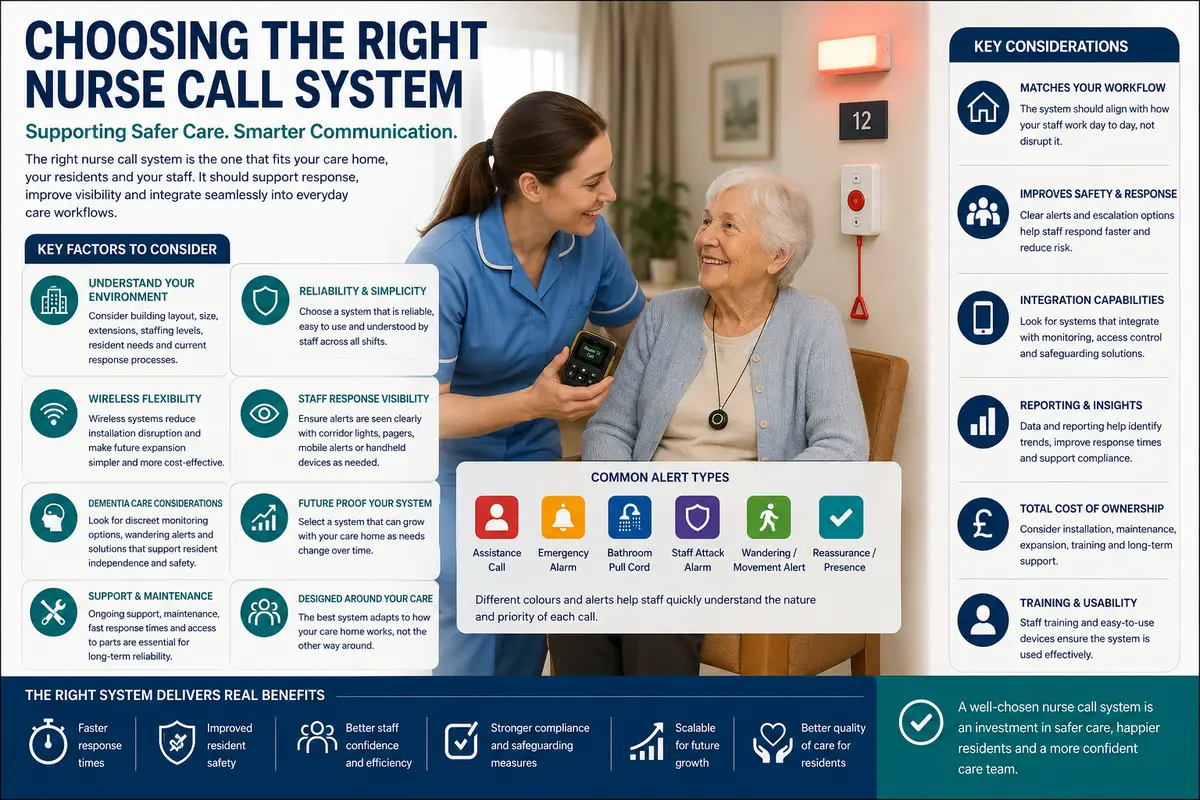
What Care Homes Should Consider When Choosing a Nurse Call System
Choosing a Nurse Call System for a Care Home Choosing a nurse call system for a care home is rarely just a technical decision. The system becomes part of the day-to-day operation of the building, influencing how staff respond, how residents request assistance, and how safe communication is managed across different areas of the environment. […]